Husarenkrapfen and Kipferl
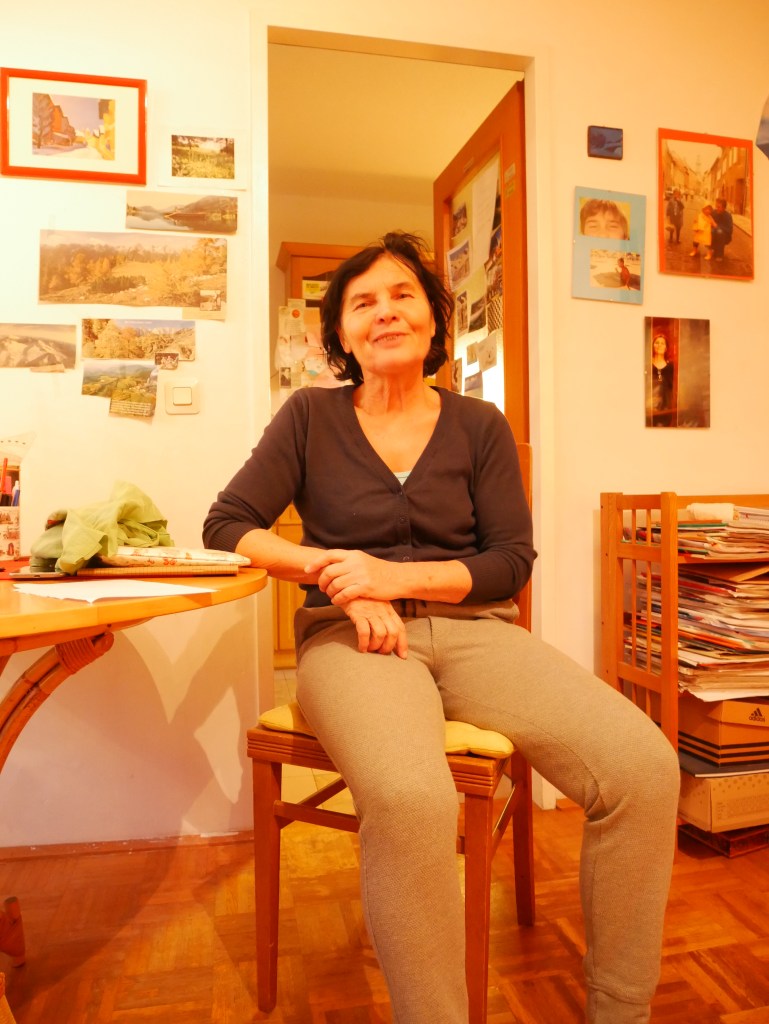
I filmed Brigitte before Christmas, so she could show me typical Weihnachtsgebäck. She lives alone and doesn’t typically make a large spread of biscuits (up to ten or even twenty varieties can be found in some houses at Christmas time!), but she made a few typical biscuits just to show me. The dough would typically rest overnight, in the fridge or stored in a cold place, which is why it was more crumbly than she would like when shaping the biscuits!
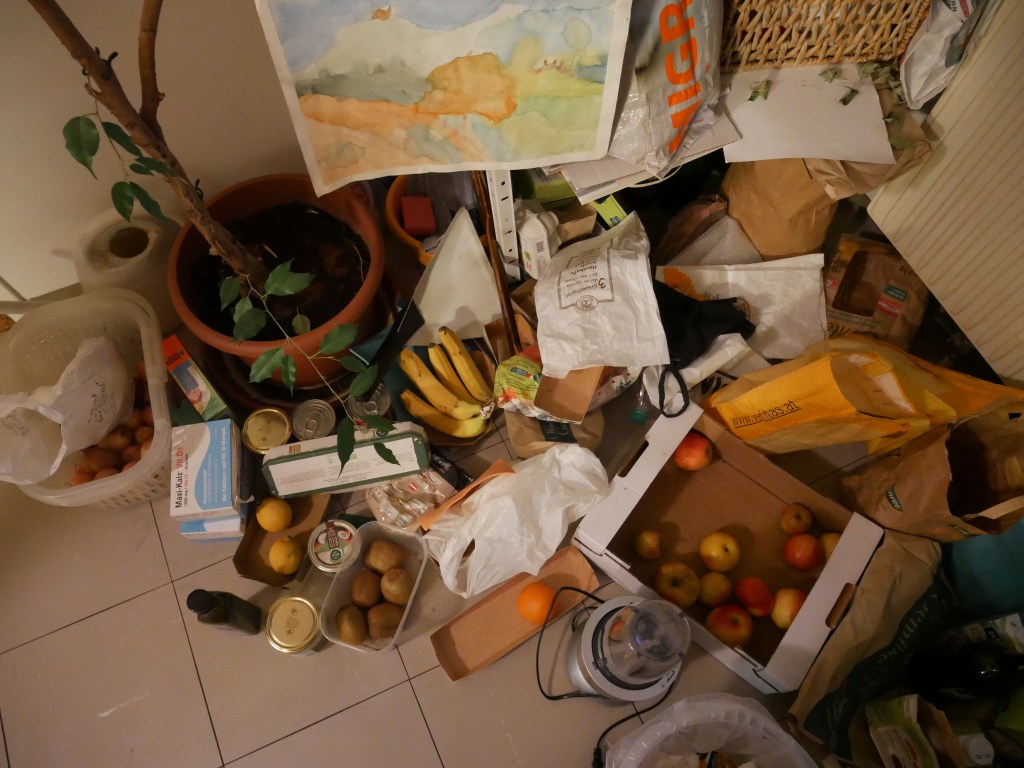
She doesn’t bake a lot, and when she does tries to reduce the sugar content and use organic ingredients. Her Mürbeteig contains ground almonds and walnuts, as well as a little coconut sugar. She emphasised the importance of using local, fresh ingredients, and preferring quality to variety. Her kitchen was full of sacks of apples and potatoes, her fridge filled with homemade spreads. She doesn’t agree with some modern received wisdom, preferring butter to margarine and preparing for me a doorstep slice of bread spread with her own homemade Schmalz and red onions while we waited for the biscuits to cook.
The biscuits ended up burning a little, but they still tasted delicious with a little jam and some Pudelzucker. Brigitte gave me half of the dough to take home with me and I made some more biscuits, which were sweet/ crumbly/ pleasantly nutty.
Glossary:
der Dotter – egg yolk
der Mürbeteig – shortcrust pastry
die Kletze – dried pear, used to make a Christmas fruit bread
der Nudelwalker – rolling pin
die K&K Zeit – common abbreviation for ‘Kaiserlich und Königlich’, to refer to the time of the Austro-Hungarian monarchy
der Krapfen – a round, doughy sweet treat, similar (although Austrians would disagree!) to a doughnut.
 Milch und Honig